22 September 2026 · 4 min read
Bouquet Styles Explained: Posy, Hand-Tied, Cascading & Presentation
Compare bouquet shapes, tying methods and carrying styles, with practical questions for a florist and examples from Baqah's digital collection.
A posy can be hand-tied. A hand-tied bouquet can be round, loose or cascading. The names overlap because some describe the outline, some the construction, and others how you carry the flowers. Knowing that distinction is more useful than memorizing a list of supposedly separate styles.
Start with the job: will you carry it, place it on a table, present it on a stage, or send a digital version? Then choose a shape and scale. This guide explains bouquet design; for identifying the individual blooms, use our visual flower guide.
Four Styles at a Glance
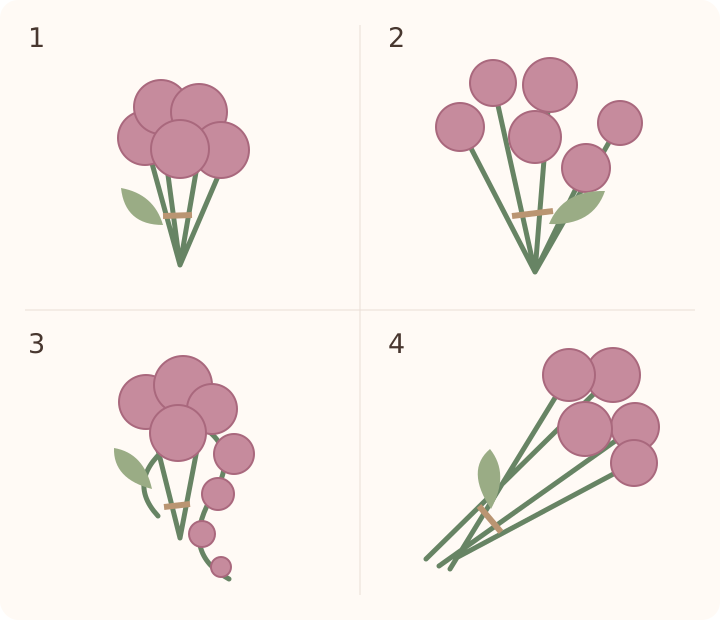
Original schematic, not to scale. Number 2 is one possible hand-tied shape, not the only one.
| Style | Main clue | Check before choosing |
|---|---|---|
| 1. Posy | Small, usually rounded flower cluster | Comfortable grip and actual width |
| 2. Hand-tied | Stems gathered and secured together | Dense or airy finish, exposed stem length |
| 3. Cascade | Flowers or foliage flow below the main cluster | Drop length and secure support |
| 4. Presentation | Elongated arrangement carried along the forearm | Carrying side, weight and transport |
Posy: Small Does Not Mean Unimportant
A posy is a compact bouquet, commonly with a rounded outline. Interflora's bouquet guide describes both loose and tightly arranged versions. It need not be a rigid ball or contain only one kind of flower.
Choose this direction when you want the flowers to feel like an intimate gesture rather than occupy the whole photograph. For a real bouquet, ask for a width in centimetres and a comfortable handle. “Small” means different things to different people. A reference photo with a hand in it is more informative than an isolated product image.
Hand-Tied: A Method, Not a Fixed Outline
Hand-tied describes assembling and binding the stems. The AIFD definitions published by the Society of American Florists distinguish this construction from the cascade's downward shape. Neither term automatically tells you the other.
When ordering, add the missing information: “loosely hand-tied, with visible space between the flowers” or “hand-tied with a neat rounded top.” Ask whether it is meant to be viewed from every side. The wrapping is another choice: a large paper collar can make a small flower cluster look much wider, so judge the flowers separately from the packaging.
Cascade: Follow the Downward Line
A cascade has a main area of flowers with a deliberate trailing section below it. That line is part of the composition, not simply a few long stems underneath a tied bunch. A short taper and a long dramatic trail give very different results.
For an event, discuss where the lowest point will sit while carried and whether it could catch on clothing. Ask the florist how to hold, transport and rest it. Do not assume every cascade uses the same holder or that one photographed from the front will look identical from the back. This is a choice about movement and silhouette, not a requirement for a formal wedding.
Presentation: Long and Directional
A presentation bouquet, also called an arm sheaf, is arranged to lie along the arm rather than sit upright like a small posy. The flowers and stems form an extended composition. It can suit a ceremonial handover or someone who enjoys a strong, elongated outline.
Think through the handover itself. Will the recipient also be holding an award, bag or microphone? Where can they put the flowers afterwards? A striking stage photograph is only one part of the experience. A smaller bouquet may be the more considerate choice when both hands will be busy.
Describe Your Choice Without Guesswork
Give a florist a short brief containing the purpose, approximate width, overall length and preferred shape. Add whether you want a tidy or irregular edge. For example: “A compact, rounded thank-you bouquet, easy to carry home, with visible stems and minimal wrapping.” Bring a reference image, then ask what is achievable with the available flowers and budget.
Do not infer price from the style name alone. Flower varieties, quantities, construction and local availability all matter. Once the outline is settled, choose a color palette rather than asking one arrangement to include every favourite color.
What These Styles Mean on Baqah
Baqah offers digital bouquet illustrations, not physical florist arrangements. Gypsophila & Red Roses shows visible stems tied with string; it has a gathered-bouquet appearance. Meadow Light provides another design to compare in the collection. Judge the visible outline, flower spacing and colors, not an assumed construction hidden behind the image.
The catalogue is not a promise of bespoke posies, cascades or presentation bouquets. You select an existing digital design and add your message. For wording to accompany it, see flower card messages.
Questions About Bouquet Styles
Is a posy the same as a hand-tied bouquet?
Not exactly. Posy describes a small bouquet, while hand-tied describes a construction method. One arrangement can be both.
Can a hand-tied bouquet be cascading?
Yes. The names describe different features. Ask about both the silhouette and the way the flowers are supported rather than treating the terms as opposites.
Which style is best for an everyday gift?
A manageable size and the recipient's taste matter more than the label. Check whether a real bouquet needs a vase and whether carrying it home will be easy.
Can I order a physical version of a Baqah bouquet?
Baqah's collection is digital. A picture may help explain a visual preference to a florist, but it does not specify real stem quantities, dimensions or an available physical product.