22 September 2026 · 5 min read
Blue Roses: Are They Real, How Are They Made & What Do They Mean?
Understand wild, lavender, dyed and engineered blue roses, APPLAUSE and Suntory's 2026 research, plus thoughtful meanings and a blue bouquet alternative.
A blue rose can be a real flower without being a naturally blue wild rose. That distinction matters when you see an electric-blue bouquet, a lavender garden variety or a headline about a scientific breakthrough. They are not the same thing, and the word “blue” alone does not tell you how the colour was produced.
As of 22 September 2026, it is misleading to say either that all blue roses are dyed or that vivid blue roses grow naturally in the wild. Engineered roses exist, and research continues to move their colour further towards blue. Here is how to understand the label and choose a gift without relying on exaggerated claims.
Four Different Things Called Blue Roses
- Wild roses: naturally occurring rose species are not known to produce true blue flowers. A photo of an intensely blue rose is not evidence of a newly discovered wild species.
- Lavender cultivars: garden roses can grow lilac or mauve petals without dye. Their names may contain “blue”, but the name is not a colour guarantee. The grower R. V. Roger describes Blue Moon as soft lilac.
- Dyed roses: these are real cut roses whose colour has been altered after growing. The blue is an applied treatment, not a new inherited trait.
- Engineered roses: researchers modify pigment production within the plant. The petals develop their colour as they grow; this is different from adding dye to a vase.
“Real”, “natural”, “undyed” and “genetically modified” therefore answer different questions. A florist should be able to explain which description fits the flowers being offered.
How Dyed Roses Are Made
One method places pale cut flowers in coloured water. Water moves up the stem and carries dye into the petals, as demonstrated in the University of the Highlands and Islands flower-dyeing activity. Surface colouring is another possible treatment; ask the seller rather than assuming every blue flower uses the same process.
For a small home experiment, use a white cut rose, a clean container and food colouring in water. Protect the work surface and observe the petals over time. Results vary; do not promise a perfectly uniform royal blue by a particular hour. This experiment does not create a blue rose plant or make future blooms inherit the colour.
When buying, request a recent photograph in neutral light, the treatment method and care instructions. For wedding clothing or table linens, ask specifically about colour transfer. Appearance alone cannot reliably identify the exact treatment.
APPLAUSE and the New 2026 Research
SUNTORY blue rose APPLAUSE was launched in Japan in 2009. It is an engineered rose, not a white rose dyed blue. The researchers' account of its development describes introducing a pansy gene to enable delphinidin production. Its blue-toned colour should not be confused with the saturated cyan of some florist photographs; expect a violet or lavender impression rather than a paint-swatch promise.
On 31 August 2026, Suntory reported further research into copigmentation: interactions between pigments and other compounds that shift colour. Four introduced biosynthetic genes enabled malvidin and isoorientin to accumulate, producing violet-blue flowers. The company reported stable coloration during three years of field trials in Colombia. These are research findings, not an announcement that a new variety is available from every florist. Local availability and the identity of any offered plant still need checking.
What Does a Blue Rose Mean?
In contemporary flower-giving, blue roses can suggest mystery, rarity, an elusive wish or affection for someone unlike anyone else. These are interpretations, not a universal code. Avoid telling a recipient that blue automatically means unrequited love or that every culture reads it as loyalty.
There is also a specific modern brand story: Suntory connects APPLAUSE with dreams coming true. That makes encouragement or congratulations a thoughtful interpretation, but it should not be presented as an ancient worldwide tradition.
For graduation, write “For the dream you worked so hard to make real.” For a partner who loves unusual flowers, try “Something unexpected, for my favourite person.” For friendship, simply explain that you chose their favourite colour. With apologies or sensitive occasions, direct words are more dependable than an ambiguous floral symbol.
A Blue Alternative on Baqah
If the blue accent matters more than the rose shape, Baqah's Sunflowers & Blue Delphinium is a digital bouquet combining sunflowers, white lisianthus and blue delphinium. It is an alternative design, not a blue-rose product, APPLAUSE offer or delivery of physical stems. A message celebrating someone's next chapter suits its bright contrast.
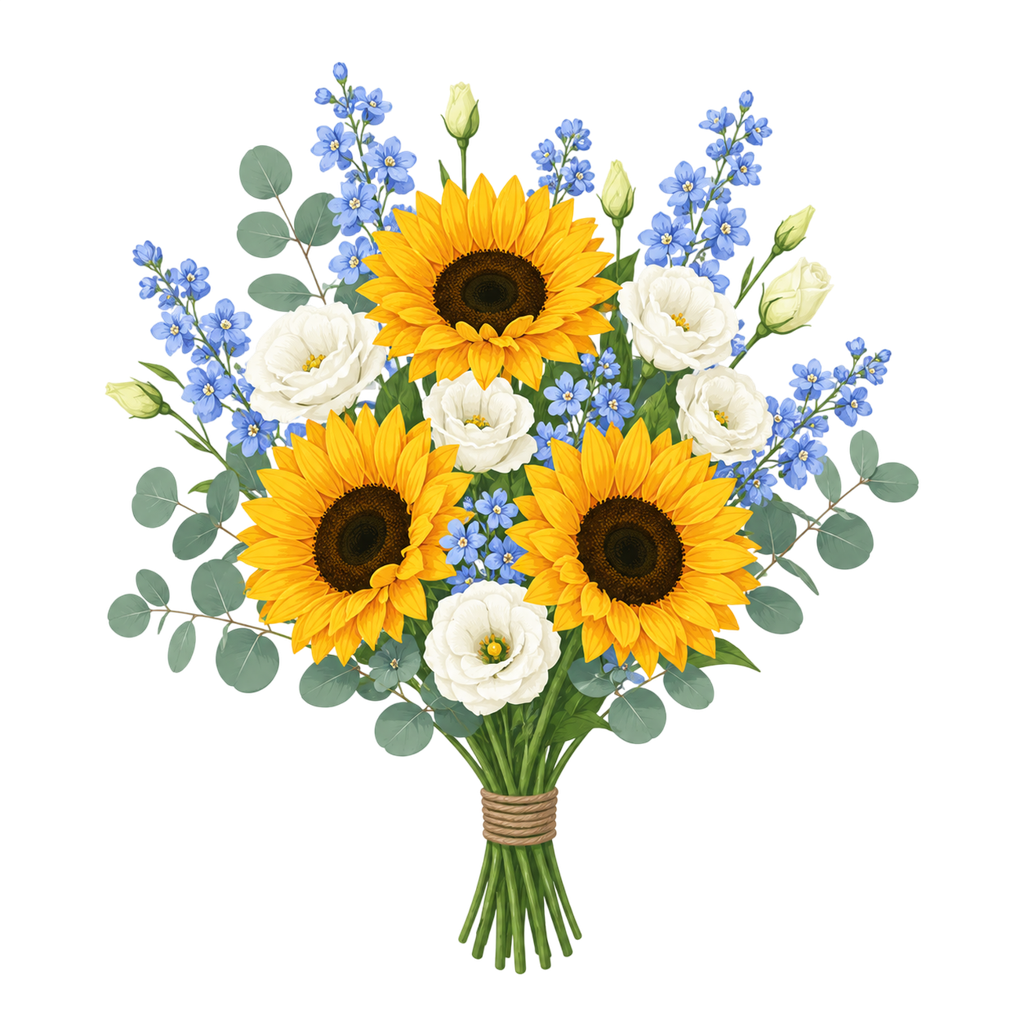
For other design choices, explore bouquet colour combinations and flowers that look like roses. For more colour context, read about blue delphinium symbolism or lavender rose meaning.
Frequently Asked Questions
Do blue roses grow naturally in the wild?
No true-blue wild rose is known. Undyed lilac garden cultivars and genetically engineered violet-blue roses are separate categories, so “not wild” does not mean “always dyed”.
How can I tell whether a blue rose is dyed or engineered?
Ask for the cultivar or product name, producer and treatment information. Intense colour can prompt questions, but a photograph cannot authenticate APPLAUSE or prove a flower is undyed.
Will seeds from a dyed rose grow blue flowers?
The dye does not alter inherited flower colour. Be cautious with seed listings illustrated by neon-blue roses; request a verifiable cultivar and evidence of what the plants actually produce.
Are blue roses appropriate for a romantic gift?
Yes, when the recipient likes them. Explain your intention in the card, especially if you mean admiration or distinctive affection rather than unattainable love. Personal taste matters more than a supposed fixed meaning.